
Read Our Latest Blogs
Lorem ipsum dolor sit amet consectetur adipis.
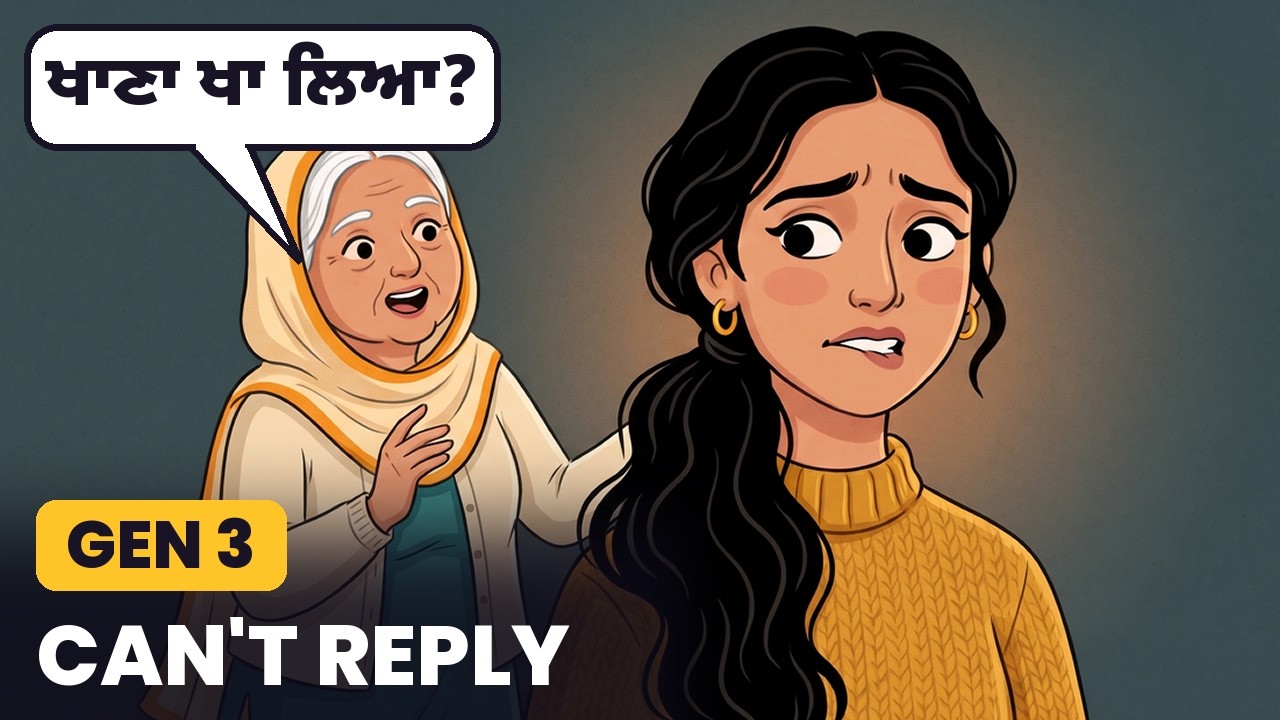
Why British Punjabi Families Lose the Language by the Third Generation
The short answer: Heritage languages usually fade over three generations. The first generation speaks Punjabi fluently, the second understands it but replies in English, and the third often can't hold a conversation at all. Researchers described this pattern back in 1966. It isn't inevitable, though: it slows down when families keep speaking Punjabi at home, even a little.
Your Nani ji speaks Punjabi. Your mum speaks some. And your kids, if you have them, probably speak none.
That isn't bad luck, and it isn't bad parenting. It's a pattern so predictable that researchers gave it a name sixty years ago. If you're a British Punjabi in your twenties or thirties, there's a good chance you're the generation it's about.
Generation one: Punjabi everywhere except work
Large-scale Punjabi migration to Britain began in the 1950s, when Britain recruited workers across the Commonwealth to fill post-war labour shortages. A large share came from one region, Doaba, around Jalandhar, Hoshiarpur and Kapurthala.
Southall in west London became an early hub, later nicknamed Little Punjab. Many of the first arrivals were young men working in factories, mills and foundries. English was the language of work. Everywhere else was Punjabi: home, the shop, the gurdwara and the phone call back to the village.
Then, in the 1960s, immigration rules tightened. Wives and children came to join them before the door closed. Now there were children in the house, and that is where the shift begins.
Generation two: two worlds, one reply in English
Generation two grows up with Punjabi at home and English at school. Every year, the balance tips a little further. School is six hours a day, and friends, TV and homework all happen in English.
You probably know the result. Your mum asks you something in Punjabi, and you answer in English. You understand everything, but replying feels harder every year.
That isn't laziness. It's exactly what the research predicts.
The three-generation rule
In 1966 the sociolinguist Joshua Fishman described what happens to immigrant languages over three generations. Generation one is fluent. Generation two can use the language, but only partly. Generation three usually can't use it at all.
It isn't only Punjabi families. A later study of Chinese, Mexican and Cuban families in the United States found the same thing: by the third generation, English had become the main language in all three groups.
| Generation | Typical Punjabi | What it sounds like at home |
|---|---|---|
| 1 | Fluent | Punjabi is the language of home and community |
| 2 | Understands, replies in English | "Haa, I know, Mum" |
| 3 | A few words, if any | Greetings, food and family names |
Generation three: what goes with the words
Generation three is born in Britain to parents who were also born here. They might know a few words: food, family names, maybe a greeting. But a full conversation with their Nani ji is where it breaks.
Here's the part people don't talk about. It isn't only vocabulary that disappears. It's the jokes, the sayings, the stories about the village and the way your Dadi ji says your name. Every family has things that only exist in Punjabi, and when the language goes, those go with it.
The numbers hide this too. In the 2021 census, Punjabi was one of the most common main languages in England and Wales after English, at about half a percent of people. But the census only asked for a person's main language. Someone who understands Punjabi but uses English most of the time doesn't show up as a Punjabi speaker at all.
It's a pattern, not a law
Research keeps finding two things that slow the shift down:
- Using the language at home. Not perfectly, and not all the time. Just regularly enough that it stays normal.
- Being around people who speak it. That's why areas like Southall held on to Punjabi longer than families living far from a Punjabi community.
And there's something the old research didn't predict: generation three deciding they want it back. Many British Punjabis in their twenties and thirties are learning now, because they want to talk to their grandparents properly or give their own children what they missed.
The good news is that you're rarely starting from zero. If you grew up hearing Punjabi, you already understand far more than you think. The gap is usually speaking, not understanding.
- Next time a parent or grandparent speaks to you in Punjabi, reply with one Punjabi sentence before switching to English.
- Start every call to a grandparent with sat sri akaal, ki haal hai?
- Ask an older relative for one saying or story that only works in Punjabi, and write it down.
"It gives me the confidence to respond back in Punjabi, even if it's very basic or a bit jumbled with English."
Frequently asked questions
Why do I understand Punjabi but can't speak it?
Understanding and speaking are different skills. Growing up, you heard Punjabi constantly but rarely had to produce it, so your listening grew and your speaking didn't. That gap closes quickly with structured speaking practice.
Is it too late to learn Punjabi as an adult?
No. Heritage speakers have a real head start: the sounds, the rhythm and a lot of vocabulary are already there. Most adults need structure and confidence, not a start from scratch.
How can I stop my children losing Punjabi?
Keep it normal at home. Simple everyday phrases, used often, matter more than perfect grammar. Time with grandparents and other Punjabi speakers helps too.
Take the free 30-second level check and we'll show you the right place to start speaking.
Take the free level check
